Quick Summary
- Deed fraud can begin with identity theft and seller impersonation, allowing criminals to create convincing real estate transactions before the true property owner knows anything is happening.
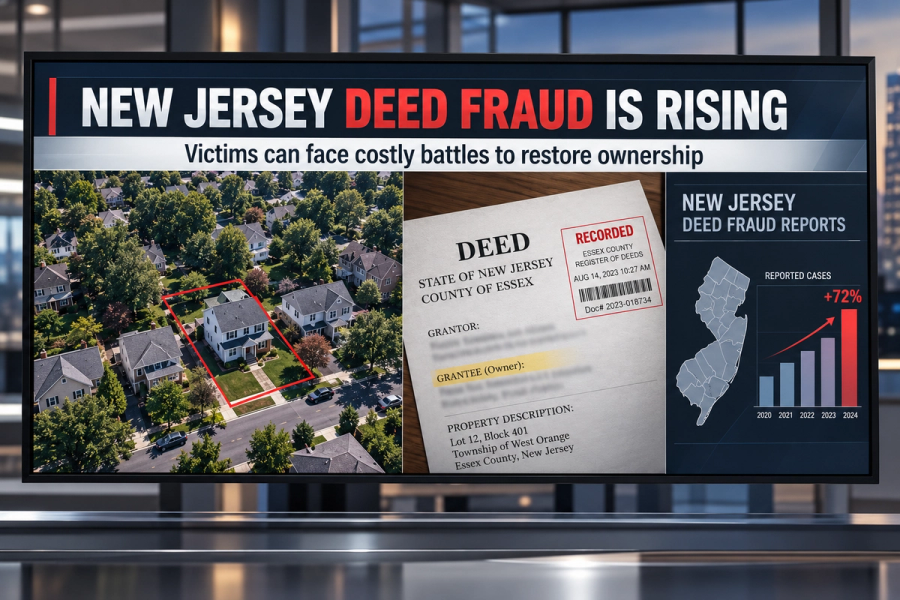
- In New Jersey, a September 2026 state investigation found approximately 135 reported incidents in FBI data from 2020 through early March 2026 and warned that victims can face significant financial and legal burdens after fraudulent ownership documents are recorded.
Deed fraud in New Jersey is increasingly tied to seller impersonation, remote transactions, forged notarizations, and false ownership claims that can reach the public record before the real owner knows anything is wrong. A September 2026 State Commission of Investigation report found approximately 135 reported New Jersey incidents in FBI data from 2020 through early March 2026. Investigators say fraudsters may pose as legitimate owners, avoid in-person meetings, push for remote closings, use wire transfers, and rely on fraudulent or compromised notarizations to move a sale forward before anyone confirms who is actually behind the transaction.
The consequences can extend far beyond the initial filing. Once an unfamiliar deed is recorded, the legitimate owner may need attorneys, court proceedings, and a quiet-title action to establish ownership again, while an unsuspecting buyer, lender, title company, or escrow agent may also become part of the dispute. New Jersey investigators say property-alert systems can help owners discover recorded activity sooner, but those alerts are generated after a document has been recorded and do not prevent the initial filing. The commission also cautions that monitoring should not be confused with legally freezing a title. Its recommendations include stronger seller identification, better notary verification, improved recording safeguards, and faster legal remedies for victims.
This story was first posted on New Jersey Vindicator
How This Type of Fraud Works
- A criminal identifies a property and gathers information about its legitimate owner.
- The criminal creates a false identity and poses as the seller.
- Remote communication is used to avoid face-to-face verification.
- Fraudulent signatures or notarizations are used to support the transaction.
- A deed is submitted for recording and may enter the public record if it appears to satisfy filing requirements.
- The criminal may sell the property or direct proceeds to an account under their control.
- The real owner discovers the transfer and may then have to begin the legal process of restoring ownership.